
Over many years of shooting, I’ve probably violated every one of the rules of safe ammo storage. If the internet is an indication, I’m not the only one. There are plenty of bad examples out there.
Fortunately, there are a great number of people who’ve taken ammo storage to another level and shown us how it should be done. There is a middle ground, one that I think we can all follow if we know the basics of ammo storage. It doesn’t have to be complicated or expensive. We must ask ourselves what our customers need to know and then put that in understandable terms. Let’s look at some of the basics.
Ammunition is made of metal components. As such, it is subject to the ordinary laws of nature. If you expose it to chemicals or water, it will corrode. If exposed to excessively high temperatures or large temperature fluctuations, the chemical compounds used can deteriorate and create unsafe conditions for anyone using the ammo. That’s pretty much the extent of knowledge customers need to understand. It’s true for all customers and all ammo and is the least bit of info they should walk away with. Everything after that consists of expansions of that information and practical tips on implementing it into a personal plan of action.
A Closer Look
The switch from muzzleloaders to self-contained metal cartridges was one of the significant advances in firearms technology. Before that, one was required to charge their guns with powder, packing or wad, and a projectile, which often was just a round lead ball sized to the barrel. Flintlocks were then fired by placing a bit of powder in the “pan” so that when the flint struck the frizzen, the sparks would ignite that powder and then travel through a small hole to the powder in the barrel. This was later improved by using percussion caps rather than loose powder outside the barrel. The function of both firing systems was to ignite the powder in the barrel using sparks from outside. Sealing all of the necessary components in an enclosed, water-tight cartridge made reloading more manageable and faster, mainly eliminating misfires. The rate of fire changed from an average of two to four rounds per minute for muzzle-loaders to a sustainable rate exceeding 20 rounds a minute.
The major problem plaguing muzzleloaders was damp or wet powder, which was practically impossible to ignite. Metallic cartridges changed all of that. Sealed cartridges could be exposed to moisture or even be submerged in water without affecting their reliability. They were not completely impervious to moisture, but the difference was like night and day when compared to loose powder.
Modern ammo, while vastly improved, still faces the possibility of moisture damage. Moisture is still Ammo’s number-one enemy. It can withstand getting wet if it’s completely dried as soon afterward as possible. But more often, it’s not direct contact with water but rather long-term exposure to dampness or humidity that causes problems.
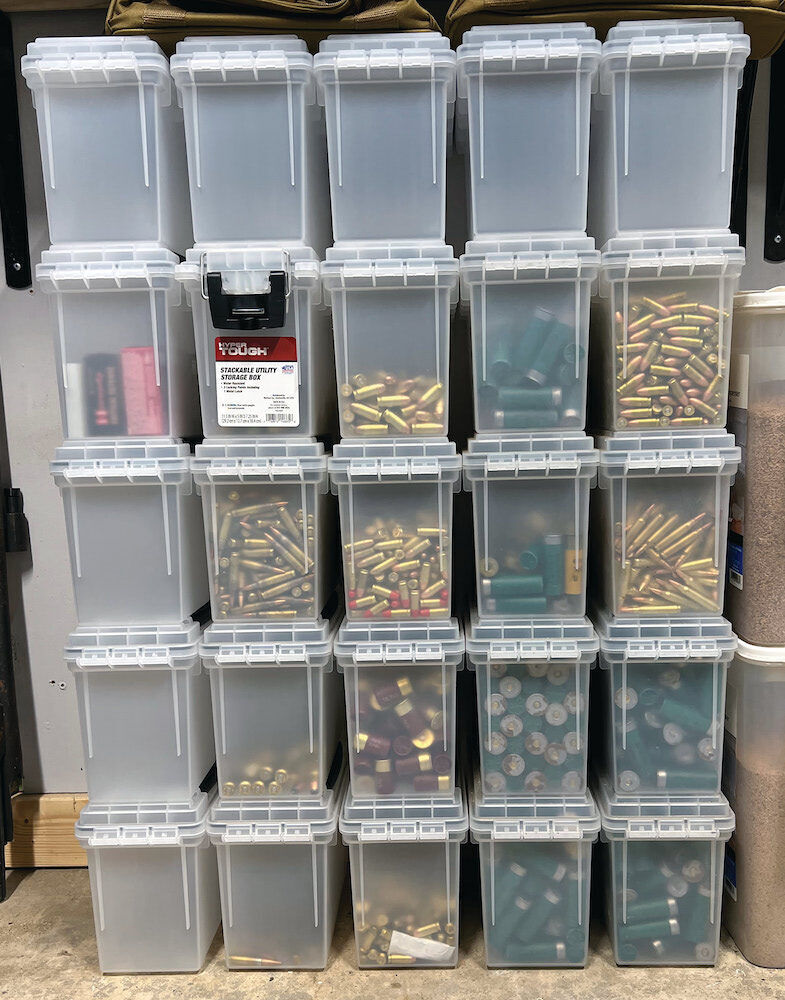
Protecting from moisture is not difficult. There are a multitude of containers available that provide effective barriers. Military ammo cans are available new or as surplus items and are very affordable. They are solid, convenient for transport, and airtight when closed. They are also designed to interlock when stacked. It’s unlikely that there will be any problems with moisture using these if they are not damaged. This is especially true if you toss in a couple of small, desiccant packs like the ones packed with electronics gear before sealing them. These may not be necessary, but they provide extra insurance and are inexpensive. If looking for something a little less clunky, companies like MTM and Plano offer more modern versions made of heavy-duty plastic and offer O-ring seals to keep moisture out. Similar waterproof “utility boxes” are available through local retailers like Walmart, Tractor Supply, or even Harbor Freight. Like military ammo cans, these too are stackable for convenient storage.
It's not necessary for your customers to spend a ton of money. Even a Rubbermaid container will work — especially if they only store one or two boxes at a time. It’s still a good idea to use desiccant packs if available. Most customers don’t think about it, but even the cardboard box that the ammo came in can attract and hold moisture. I’ve heard of a few individuals taking matters to extremes by using vacuum food sealers for their ammo. It works but is overkill for what the average customer needs.
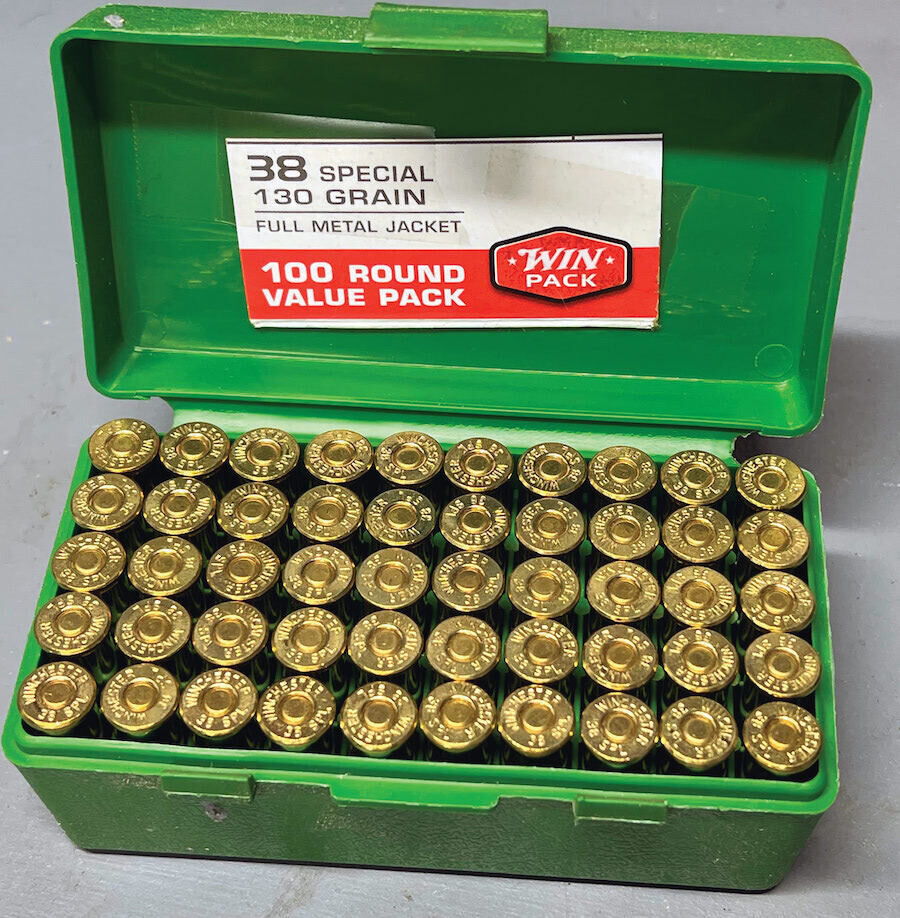
Chemical exposure is also a problem. Chemicals can cause corrosion much faster than moisture. Products containing ammonia, chlorides, acetates and other acids should be kept away from ammo as they react negatively with brass cases, causing them to corrode and deteriorate. The best advice is to store ammunition far apart from cleaners and moisture. Often, people are told that a good place is in their bedroom closet or under their bed. These certainly work, but may cause other problems.
Another concern is exposure to extreme temperatures or temperature cycles. Cold air doesn’t affect ammo very much. There might be a slight reduction in velocity, but unless the ammo was loaded specifically as a low-velocity ammo, it’s doubtful there would ever be an issue. Hot air, however, does the opposite. Heat may cause the velocity to increase. It’s not much of a problem with standard practice ammunition, but self-defense ammo is often loaded to much higher velocities. An increase in velocity might push the pressure up into the +P category. Worse, many defensive loads are already loaded to higher pressures and carry a +P designation. This could push these velocities into the +P+ category, thus increasing the possibility of a catastrophic failure. Not all firearms are capable of shooting +P ammo much less +P+. Customers should always be urged to check the owner’s manual or with the manufacturer before using +P or +P+ ammunition.
Most customers think nothing of leaving their ammo, gun, or loaded magazines in their car on hot summer days. They can become extremely hot, as anyone who has touched a hot steering wheel or leather seat can attest. Think for a moment about a cartridge. The primer is made of one type of metal, the case another, and the bullet itself a third. We know that metals expand at different rates and temperatures, but we don’t usually apply that to things like ammo. Such hot temperatures may lead to the breakdown of primers and powder known as gassing. Further concerns come from hot/cold cycling. Exposure to repeated cycles of hot and cold makes the issue worse. It can even render the ammo unusable.
It's easy to see why people recommend storing ammo in a bedroom closet or other similar conditions. It’s generally cool, dry, and has almost no fluctuations in temperature. But this brings up a couple of other concerns. Specifically, I’m referring to who has access to those locations. Ammo should be stored somewhere that it’s only available to authorized people. I’ve personally seen where a child struck a cartridge with a hammer to see what would happen. Nobody was hurt during the incident, but it illustrates the danger. Also, if a child does happen upon a stored firearm, it’s harmless without ammunition. This is why we recommend that firearms and ammunition be separately and securely stored unless being used.
As you can see, there are many factors to consider when talking to your customers about storing their ammo. Not all of it applies to every customer, but certain customers may find the information to be critical. This is especially true today, where ammo shortages and stockpiling are common. Gone are the days of walking into a local hardware or sporting goods store and buying a box as you need it. Those wanting to ensure they don’t run out must purchase and store higher quantities when available. Customers need to know how to protect that extra ammo until it’s needed.