
Barrel crowns are rarely mentioned by customers, but they may mention that their favorite rifle or pistol doesn’t group well anymore. It’s not uncommon to hear them say, “This thing used to shoot great, but now it’s all over the place.”
If a rifle used to shoot accurately but suddenly loses accuracy, the barrel crown should be one of the first places to begin searching for the problem. Understanding this small detail can help diagnose problems, answer questions, and sometimes save the customer from making an unnecessary purchase. It’s an easy thing to overlook, but it plays an important role in how consistently a rifle sends bullets downrange.
Influencing Flight
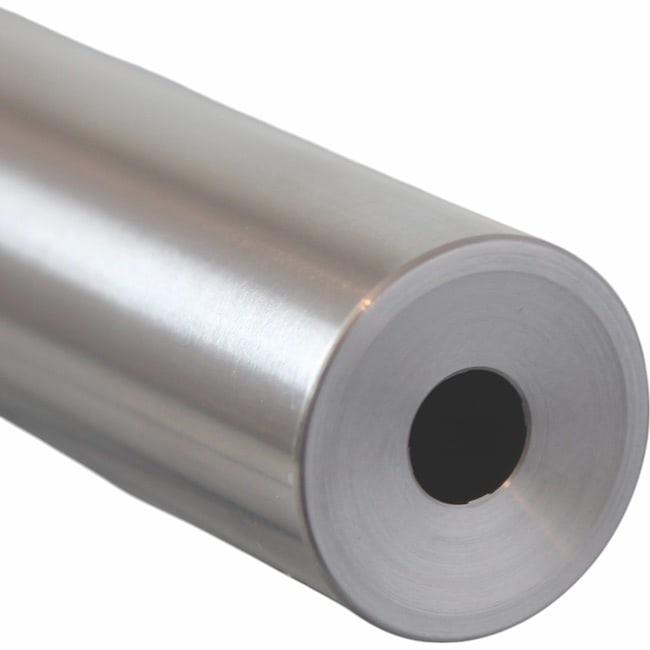
The crown is the shaped surface at the very end of the muzzle where the rifling terminates. It is literally the last part of the barrel that influences the bullet before it leaves the rifle.
Inside the barrel, the bullet is supported and guided by the rifling. When the projectile exits the muzzle, high-pressure gas is still pushing from behind. That gas immediately escapes around the base of the bullet. If the crown is perfectly even all the way around, the gas releases symmetrically and the bullet leaves the muzzle cleanly.
If, however, the crown is damaged or uneven, gas escapes more strongly on one side than the other. That uneven gas release can push against the base of the bullet as it exits the barrel. The effect is small — measured in thousandths of an inch — but it happens at the worst possible moment: the instant the bullet leaves the rifle. Downrange, that tiny disturbance can translate into inches of missed accuracy.
Maintaining Accuracy
Modern shooters tend to assume crowns have always been treated as precision surfaces. That was not always the case. Many older military rifles simply had flat muzzle cuts with minimal finishing. Accuracy requirements were different, and speed of production mattered more than fine details at the muzzle.
The importance of crowns became obvious when military rifles began losing accuracy after years of cleaning from the muzzle. Steel cleaning rods repeatedly contacting the rifling at the muzzle slowly wore the edges unevenly. The rifles still functioned normally, but accuracy deteriorated. Gunsmiths discovered that recutting the crown often restored the rifle’s accuracy immediately. That observation eventually led to more careful crown designs and machining in modern barrels. Today, precision rifles receive extremely careful crown finishing as part of normal manufacturing.
While dozens of variations exist, most fall into a few general categories. Understanding the basics helps you explain what the customer is seeing.

Flat Crowns
The flat crown is the simplest design. The muzzle is cut square across the barrel with little additional shaping. Many surplus military rifles use this approach. Flat crowns are easy to manufacture, but they leave the rifling edge exposed at the very outer edge of the barrel. That makes the crown more vulnerable to damage from impacts or cleaning rods. Because of that vulnerability, flat crowns are less common on modern precision rifles.
Recessed Crowns
The recessed crown is extremely common on modern rifles. In this design, the rifling ends slightly inside the muzzle instead of directly at the outer edge. The surrounding metal forms a protective ring around the crown. That protective ring helps shield the delicate rifling edges from damage if the muzzle contacts a hard surface. Many hunting rifles and factory precision rifles use recessed crowns because they balance accuracy with durability.
Target Crowns (11-Degree Crowns)
Precision and competition rifles often use what is called an 11-degree target crown. Instead of a simple recess, the muzzle surface is cut at a shallow inward angle. The rifling terminates at the inner edge of that angled cut. The angled surface helps direct escaping gas away from the bullet base in a consistent pattern. The exact angle varies among manufacturers, but the concept is always to ensure the bullet exits the muzzle with minimal disturbance. For counter staff, the important point is this: The quality of the crown cut matters far more than the exact angle used.
Step Crowns
Some rifles feature a step crown, where the muzzle includes a short recessed section followed by the crown surface. This design adds extra protection around the crown and is common on tactical or heavy-barrel rifles. From a sales standpoint, it is simply another way of protecting the rifling edge while maintaining a precise crown surface.
Recognizing Crown Damage
One useful skill for gun counter employees is recognizing when a crown might be the source of a customer’s accuracy complaint.
Common warning signs include:
- A rifle that previously grouped well but suddenly does not
- Groups that open dramatically without obvious cause
- Visible nicks or dents on the muzzle edge
- Rifling edges that appear worn or uneven
A quick visual inspection under good lighting can sometimes reveal obvious damage. Even small imperfections at the crown can affect accuracy.
Common Causes of Damage
Most crown damage occurs during handling or cleaning rather than shooting. Typical causes include:
- Cleaning rod wear – Repeated cleaning from the muzzle using steel rods can slowly wear one side of the crown.
- Impact damage – Dropping the rifle or bumping the muzzle against hard surfaces can dent the crown.
- Improper tools – Using screwdrivers or other tools around the muzzle can easily nick the rifling edge.
- Corrosion – Rust at the muzzle can erode the crown and damage the rifling.
Because the crown is small, damage is sometimes easier to feel with a fingernail than to see with the naked eye.
Simple Repairs
When crown damage is identified, customers often assume the barrel is ruined. In most cases, it is not. A gunsmith can usually recut the crown on a lathe, removing a small amount of metal and creating a fresh, perfectly centered crown surface. The process shortens the barrel only slightly — often by a few thousandths of an inch — and can restore accuracy dramatically.
Many rifles that appear “shot out” simply have damaged crowns. Knowing this allows counter staff to recommend a relatively inexpensive gunsmith repair instead of suggesting a complete barrel replacement.
Crowns and Muzzle Devices
Modern rifles frequently use muzzle brakes, suppressors, or flash hiders. This introduces another factor: thread alignment. When a muzzle is threaded, the crown must remain perfectly concentric with the bore and the threads. If the crown or threads are off-center, accuracy problems can occur even if the barrel itself is otherwise good. For that reason, quality gunsmiths cut the threads and crown in the same lathe setup to maintain perfect alignment.
What Really Matters
Customers sometimes ask whether one crown style is more accurate than another. The practical answer is simple. The most important factors are:
- a perfectly centered crown
- smooth machining with no burrs
- protection from damage
- proper alignment with the bore
If those conditions are met, most crown designs perform extremely well. A simple recessed crown that is cut correctly will shoot just as accurately as more elaborate designs.
At the Counter
The barrel’s crown is a small feature, but understanding it can make a real difference when helping customers troubleshoot rifle accuracy. A quick crown inspection can sometimes explain a mysterious loss of accuracy. It can also prevent a customer from replacing a rifle when a relatively simple gunsmith repair would solve the problem.
For sales staff, that kind of knowledge builds credibility — and helps customers get better performance from the rifles they already own. Sometimes the most important part of a rifle is the last thousandth of an inch at the muzzle. And that is exactly where the crown lives.