
At Renaissance Firearms Instruction, where we train primarily brand-new shooters, we are seeing a surge in hunters that the industry hasn’t experienced in decades. Some cite the rising price of meat for their new interest, while others are heading afield as a result of experiencing shortages during the COVID-19 years.
To that end, most can use a bit of help matching the best ammunition to their need, as hunting ammo tends to be quite elusive. As oldsters who’ve spent plenty of time behind the counter and in front of the classroom, we take some basic notions for granted, and often assume newbies understand the differences among the myriad of choices on the sales floor. But you shouldn’t assume anything, so we’re covering some of the more confusing aspects of game-getting fodder and highlighting what is often misunderstood.

Go Hard on Soft
If we begin with classic soft points, most new gun owners aren’t familiar with the concept, nor their effective range. Most are shocked to hear that it’s typically all they’ll need inside of 300 yards, and that on most hunts, the shot will be far inside of that. Explaining that the paltry price tag is a product of their popularity, not lower quality, is critical as well. Brushing up on history is helpful, too, as pointing out that products like Remington Core-Lokts have been around since 1939 usually warms them up to these loads. After all, how many consumer products have been around for more than 85 years and remained largely unchanged? These also make a great sale for anybody looking for inexpensive target practice at moderate distances. If they are on the fence about hunting, they’ll be ready the moment they change their mind, as a properly zeroed rifle holds the same on fur as it does paper.
A Hot Tip
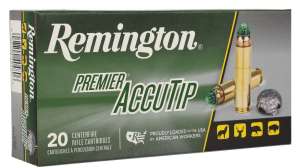
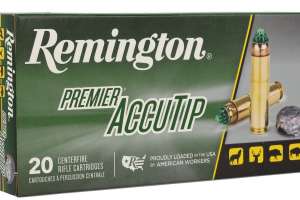
Tipped hunting ammo is all the rage and has been for several years. Aside from looking nasty, it’s important to explain this tip's function and that it’s built for longer pokes. Just like boattails, polymer tips are credited with making the projectile more accurate, but it's really just accuracy at distance, as they raise the ballistic coefficient and help them buck the wind and retain velocity. That’s a mouthful to put on a box, so be sure to get it across.
Likewise, many of these aren’t built to expand at closer engagements, so using them in a wooded setting might result in a long tracking session for a wounded animal, forever turning them off from the sport. On the other hand, if the customer intimates that they are going on a classic western hunt, you’d be doing them a disservice if you put anything else in their hands. If your shop conducts training sessions, this is also a great time to sell them a long-range class. If not, consider sending them to an instructor that you work with, as they’ll have the opportunity to go through their gear list and make recommendations for items for their hunt. When they return to the store, odds are they’ll be interested in a set of shooting sticks, binos, backpacks, or any of the other gear required to locate game and place an ethical shot.

Deer Don’t Have Scoring Rings
Discussing the previous types of ammo almost always leads to a discussion about match-grade ammunition. Being more expensive doesn’t automatically make it “the good stuff” for every activity. Additionally, new shooters see phrases like “Open-Tip Hollow-Point” and assume that is to enhance lethality. It’s important to explain to them that these are non-expanding open tips, and only boost their ability to slip through the air. Likewise, although they look identical, polymer-tipped match ammo does not function like its hunting-grade counterparts. I always like to remind them that these bullets usually have a small hollow cavity behind the tip, whereas match bullets do not. This usually explains the slight weight difference between the two as well.
Unleaded Premium
As hunting zones enact “lead-free” policies, it’s important to keep a running list and train your staff on where the ones in your area are. Through casual conversation, a customer might mention it, and sending them out with something they can’t use will leave a stain on your reputation. At the same time, it’s a good idea to inform them that this doesn’t necessarily mean they are handicapped. These folks will be surprised to hear that many hunters are voluntarily switching to monolithic copper bullets for their improved terminal performance. As these don’t rely on a core and jacket staying together, they typically have better weight retention — explain all of this. Additionally, engineering them for expansion is a fair bit easier and even opens the door to controlled fragmentation, something they might need, depending on the hunt.
Pills made from a compressed copper matrix are excellent for varmints and offer explosive results with less of a chance of continuing on after striking a game animal or hard target. Lastly, don’t forget about the bird hunter. Through a little back and forth, you might find out that they plan on hunting ducks or geese. These folks must also avoid lead. In this instance, it’s an opportunity to upsell them bismuth or TSS, as these are denser than traditional steel shot and offer better range and lethality.

Silent but Deadly
With suppressors now more affordable, thanks to the relaxation of the $200 tax stamp, they are becoming the modest muzzle accessory that they deserve to be. To that end, it helps to direct customers who have one toward subsonic ammunition. In doing so, it’s important to explain to them that in most cases, this ammo doesn’t have the same energy as the conventional supersonic loads they might be used to. That means shots will need to be closer and placement is critical.
If they are handloading, be sure to help them pick bullets that are built to expand at lower velocities, too. Companies like Hornady, Federal, and Barnes have released explicit subsonic hunting fodder, and it’s not a bad idea to group it all together on a shelf. If a customer brings some to the register, open a conversation with them about what type of silencer they have. You’ll be surprised to find out how many new shooters think that these products are hearing-safe on their own and do not own a suppressor. In that case, you can save their hearing, or even possibly sell them a can.
What’s Old is New Again
The rise of silencers is also fueling the lever-action comeback. Many of these cartridges are inherently subsonic, and nothing suppresses better than a closed firing system. With that, it’s important to educate customers on the dangers of pointed bullets in tubular magazines. The good news is that most cartridges associated with lever actions are made with blunted or round-nose projectiles, but if you have a handloader at checkout, they can make some potentially dangerous stuff. Again, not a handicap, as ammo makers are ready for their return with specially tuned cartridges for cowboy guns. Federal’s HammerDown was made in conjunction with Henry Repeating Arms, and Hornady’s Leverevolution was one of the first to address this problem; introduce them to both. These product lines are great to keep in stock as most who try them come back for more.

Straight to the point
Most lever actions also meet the criteria for straight-walled territories, which is another reason to keep some in stock. If your prospect is new, odds are they don’t know what that means yet. Explaining to them that some areas that previously outlawed pistols and rifles now allow certain chamberings is usually welcomed news. Explaining that these cartridges can replace harder-kicking shotguns and muzzleloaders might just help you sell a gun, too. If not, it’s another good opportunity to sell them the best ammo for the lever gun they already have.
Slug it Out
If your customer is set on using their shotgun, or the area doesn’t permit straight-walled metallic cartridges, it’s a good idea to check to be sure they are buying the right ammo. As if pronouncing sabot wasn’t hard enough, few know which barrel type to use them in. I always like to explain that rifling has to be present in one place, and one place only; either the projectile or the barrel. Asking them to point out which shotgun they have will help you direct them to the right product. It’s also a great opportunity to sell them a scope, sights, or even a rifled barrel to take advantage of today’s longer-range sabot loads.
Checking out
Working with new hunters is a rewarding experience. It offers us a chance to turn back the clock and re-experience those first Ah-Ha moments. Thinking back to how confused I was when I began has always helped me to stay humble and genuinely inform newcomers that there aren’t any stupid questions. With a little bit of mutual respect, we both leave richer through the experience, and socking away Pittman-Robertson dollars helps to ensure our favorite game lands remain available. Be sure to tell them everything you know about hunting ammunition, but don’t worry, nobody is asking you to give away your favorite spot.