
Between the COVID rush and the loosening of concealed carry laws around the country, we have seen a tremendous surge in handgun ownership. Every day, new students are showing up at our classes at Renaissance Firearms Instruction with a new pistol and a box or two of ammunition that they know little about.
Ammo is one of the most confusing accessories to purchase, and as technology advances, things become blurrier than ever for the newcomer. Knowing how to explain some of the basic types can result in greater sales, as preparedness items are easy add-ons — and ones that you don’t have to feel guilty about selling. Some basic tips, an easy-to-understand description, and of course, a stock of good candidates are all it takes to get clients to pull the trigger on the best ammo for their needs.

Have a Ball
Ball, or full metal jacket ammo, is essential and ought to be put in front of anybody buying a handgun. Many retailers make the mistake of omitting it from the sale, particularly for customers who have expressed that they want a gun for self-defense or hunting. As rounds for those purposes are substantially more expensive, a new shooter will be under the impression that a trip to the range will cost hundreds of dollars. This stops them from practicing and basically eliminates the chances of them returning for future sales. Aside from our pocketbooks, inactive firearms owners typically don’t participate in the 2A discussion, so anything that brings them to the firing line more often will also remind them of the value of this right and help us in the fight.
Wrapped in a metallic jacket, typically copper, explain that this is the most affordable option in the shop, and is packaged in 50-round boxes or more. Although less expensive, I always like to get the point across that this is not inaccurate ammunition or “junk” and that many sponsored competitive shooters make their living with it. If your client is into history, you might want to explain that ball ammo is a result of the Hague Convention, and is essentially the kinder, gentler bullet, as it doesn’t expand. This is also a great time to relay that it’s not the best choice for self-defense.
When selling FMJ ammo, the key here is to let the customer know that it all isn’t the same. Some prefer the milder push of heavier bullets, while others find lighter bullets to be easier on the hands. Guns will be equally particular, and there’s no way to tell what one gun will cycle better and group more accurately. This is a good opportunity to suggest buying a box of each typical weight for their chambering to find out for themselves. So, be sure to stock a wide variety; it’s easy to move.
Hollows Help
While it’s bad when a customer isn’t supplied with ball ammo for practice, it is far worse when they leave the shop without a good self-defense load. The kings of this use are conventional hollow-points. These can also be sold under the auspices of safety equipment, as they have a lower chance of passing through and hurting someone, or something, that wasn’t your target.
I’ve always found the mechanics behind how they work fascinating, and explained right, your clients should be intrigued enough to purchase a box. Essentially, they operate on the hydraulic principle that you cannot compress liquid, and as living tissue is nearly 100% liquid, it qualifies. As this material fills the hollow nose, it compresses and has to go somewhere. The only place is out, which causes the signature mushrooming effect. If your client presents a moral issue with these, remind them that these were made to stop, not kill. But, of course, when a bullet stops inside of something, it transfers most of its energy.
There are many good options to keep on the shelf, and just like FMJ, it’s not bad form to suggest they try a bunch before deciding. Arguably, it’s even more important in this case, as they want to ensure that it runs well before an emergency may occur. I suggest keeping products like Federal HST, Speer Gold Dot, and Hornady Critical Duty on the shelves, as clients may ask for these by name after a conversation with a friend or family member who wears a badge.
For those that balk at the cost of hollow-point ammo, simply explain that a lawsuit from an innocent bystander is far more expensive than even a lifetime supply of this ammo, which for most of us, is only going to be a few boxes. Ammunition doesn’t really go bad, and realistically, you can get away with the same magazine’s-worth for a lifetime. However, a better practice, and the industry standard, is to cycle it out every six months. This is always worth a mention and creates a better chance of that client coming back.
Lastly, be sure to include a discussion about +p and +p+. This minor marking is often overlooked, and pointing it out can save a client’s gun, or help you justify a higher price tag. Letting them know it means that it’s more effective, but only specific guns can handle it, might move their hand. If they’re particularly moved by your information, and don’t own a gun that can safely fire the variants, your conversation might even end in a new gun sale.

Make Another Stop
Although rare, there are indeed some locales that do not permit hollow-point ammunition. For these places, designs that use hydraulic displacement, or fluid transfer technology, really shine; research surrounding states to find out who might be interested in this.
These projectiles work like wings on an airplane and stop as a result of the way fluid rushes over them. These are also almost always monolithic, so they deliver better barrier penetration and typically also meet any “lead-free” requirements. Lastly, as they don’t rely on velocity to perform, these are an easy sell with micro pistols, especially when you spend a little time explaining this to the customer. Black Hills made this popular with their Honey Badger Line, but companies like Underwood also utilize bullets of this type. So, if you can’t find one, be sure to stock the other.
The easiest way to sell these? Just show them. Slipping the edge of a pocket knife under a box flap will allow you to neatly open an ammo box. Pull a round out, put it in the client’s hand, and let their imagination take care of the rest.
Handgun Hunting
With the price of everything going up, many are resorting to harvesting their own meat. One way our clients cut costs in this area is to repurpose a firearm for game getting. While this may cost you a gun sale, you can still capitalize on ammo.
Speaking from bad experiences, self-defense fodder is not always effective on deer and other game of that size — it pays to buy hunting-specific loads. This is a misnomer that ought to be clarified over the counter. Hunting rounds are made for slower expansion, and are going to be more reliable when they pass through fur. The delayed effect ensures that they slip through the thick skin and hide, reach deeper into the vital area, and humanely dispatch the animal. Recently, Remington released its Core-Lokt Handgun series, which joins Federal’s Fusion line for this platform. These bonded hollow-points stay together after impact and make sure a close-range shot doesn’t end in a long-range recovery. Hornady’s new Handgun Hunter family is another excellent option and uses an elastomer-filled hollow-point cavity to create the same effect. Keep a range of these, as many clients are brand loyalists, and it’s helpful to oblige them.
Unintentional Hunting
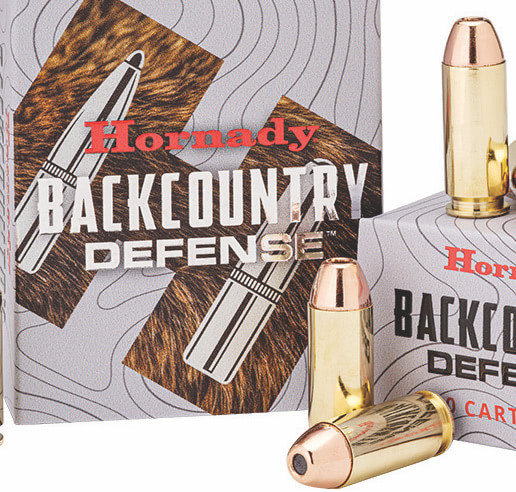
Also to the tune of cost savings, camping and hiking have become popular again. Thanks to apps like Far Out and AllTrails, we’re trekking deeper into the wilderness than ever before. With that comes an increase in dangerous wildlife encounters and a wide expansion in this class of ammo.
There are several types out there for this purpose, but most are designed to penetrate as deeply as possible. The latest to hit the scene is Hornady’s Backcountry Defense. The new Dangerous Game Handgun projectile that they are built with uses a rolled-in hollow point to help keep the bullet together—be sure to explain the difference.
While innovative, loads made from classic hard-cast lead are still sought after, and there are plenty of good options out there. One is Federal’s Solid Core, which is a new spin on the idea. The bullets used are made of this dense, rigid material and are wrapped with the company’s proprietary Syntech coating. This helps eliminate the smoke that comes with typical hard-cast bullets. One of the best sales tactics for these products is to put a display by your camping gear, as it’s a reminder to be prepared for anything. If rules or laws won’t let you put ammo out on the sales floor, an ad in that area with “see an associate for details” is also highly effective.
Ringing Up
Spending a few minutes with your clients will help to sell the best handgun ammo for their needs, and likely result in their return. As many loads share a lot of similar characteristics, your time will be appreciated, and establish you as a credible source of information. Once that relationship is in place, the customer will trust you to help with other decisions, which creates not only future sales, but a loyal client who sings your praises to other gun owners.
As we’re greeted with droves of new gun owners, it’s best to remember that many have made a hurried decision, and these days are a second chance to go over the trickier subjects and help get them squared away and straightened out.