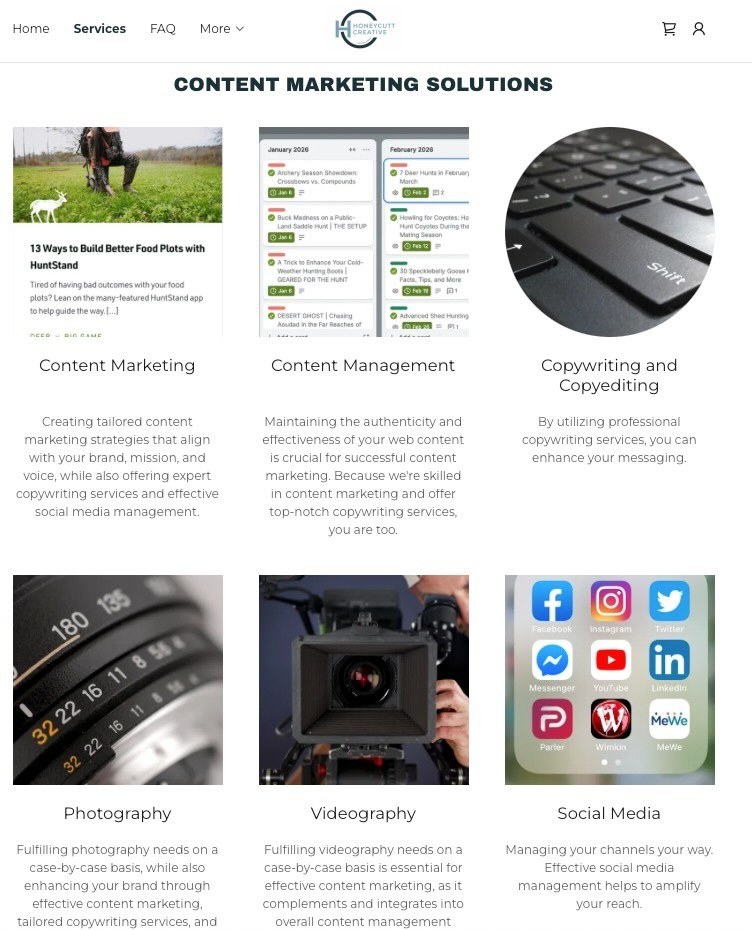

It happened again — you fell to the infamous shadow ban. Let's face it: Facebook, Instagram, Twitter, YouTube and others don't like hunting. It’s important to understand the different ways businesses can advertise, market and otherwise get their message out to the masses.
So, what will you do? After all, these outlets have far bigger sticks than those of us in the hunting world. So, in short, learn to play their game. Better yet, learn to implement alternative advertising and marketing means. As someone who runs a content marketing agency, I understand what it takes to be the man behind the curtain pulling all the digital strings. And I’ll be the first to stand up and say it — big social sucks … sometimes.
Modern Marketing Challenges for Hunting Companies
It’s unfortunate when law-abiding hunting and outdoor businesses have to play by a different set of rules than other companies in America’s free market landscape. That’s the world we live in, though. It’s resulted in an array of modern marketing challenges, especially for hunting companies.
Some might experience sudden restrictions. Generally, these are temporary labels. However, repeated offenses typically lead to permanent bans. In the worst situations, brands have dealt with sudden and unexplained deplatforming — even when they did nothing wrong. That said, it’s more often related to unrealized and innocent yet still violations according to the “rules” that bite them.
Another common issue is individual de-monetized posts. This can be applied to singular pieces of content. For repeated or larger offenses, it can become page- or channel-wide. Oftentimes, even when a brand seemingly does everything right and follows the rules, they can find themselves in hot water. Thus, it’s always best to err on the side of caution.
Maintaining Positive Traction with Big Social
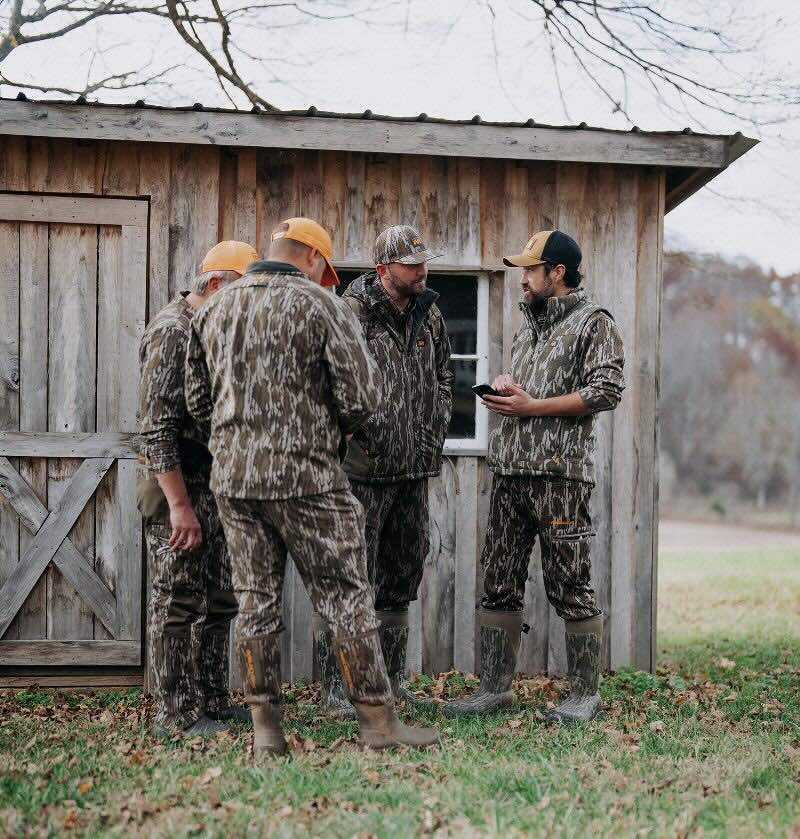
Facebook, Instagram, Twitter, TikTok, YouTube and other platforms should remain within your overarching digital and social strategy. These are major outlets with massive numbers of users. Don’t ignore them. That said, it’s important to keep certain things in mind and take certain precautions.
First, play by the rules. Study the community guidelines and don’t break them. Think of using these platforms as leasing a building rather than owning one. You wouldn’t knock a hole in the side of an exterior wall and add a door, would you? Nor would you trash the place and leave it a heaping dump? No, these are things that violate the lease agreement and get you kicked out. Using big social is no different.
It’s also crucial to maintain authenticity. Continue to deliver high-quality content that works within the framework of each social media channel. Completely abandoning big social is folly, even if it doesn’t inherently like us.
If you aren’t familiar with all of the rules, it’s often prudent to hire a proven consultant. Use this method to train in-house staff. Or hire employees with proven pedigrees. An additional option is to outsource media to specialized individuals who can deliver a great product and ensure compliance.

For those who operate in especially sensitive arenas within the hunting space, consider starting “backup” pages now. There’s nothing wrong with having multiple pages on the same platform. Continue maintaining your primary profile while building additional pages around it. Oftentimes, these are viewed as subsets or offshoots of the main page. This leads to additional exposure but can also serve as emergency backups if you lose access to the main page.
To increase social exposure, diversify with influencers. Oftentimes, even if you receive temporary bans or restrictions, you can still lean on your stable of influencers to spread important messages. This provides you with another means of reach into areas and audiences you’d otherwise miss. Of course, maintain a mix of major-, mid-major and micro-influencers. These serve different roles and accomplish different things. Number of followers isn’t always the primary metric in which to assess a potential influencer. It’s all about context.
Other Modern Advertising and Marketing Solutions for Hunting Companies
So, big social left a bad taste in your mouth, and now you want a little bit of petty payback? I don’t blame you. Big social sucks … sometimes. Fortunately, there are other modern advertising and marketing solutions for hunting companies.
Direct-to-consumer channels are a significant area of importance. Creating and building your own (owned) platforms is the best peace of mind. Within reason, these allow you to control most of the rules of engagement, so to speak.
What are examples of owned platforms in terms of marketing? Generally, these are apps, websites, blogs and email lists. With these, you have complete control over posting. It’s part of your business and you call the shots. Third parties can’t control your branding, identity or messaging. Overall, it’s a cost-effective and low-stress way to establish authority, engage audiences, initiate conversations and more.
In certain situations, podcasts are also lower risk, even when hosted on other platforms. Consider uploading yours to multiple places and offering it via different platforms in the event that one doesn’t like something you have to say.
To do this effectively, it requires producing top-notch content, though. That’s true for apps, websites, blogs and email lists. Without professional, high-quality content, these outlets are completely impotent and stand to turn off customers rather than recruit and maintain them.
In addition to free content, some might even offer premium features that require paid subscriptions or memberships. This is an additional way to project authority, create trust, boost revenue and more.
Overall, content is king. By creating your own content hub, and feeding that machine, you can produce powerful content marketing campaigns. Then, use big social to assist with that operation as needed and allowed.
Additionally, with an established email list, you can deliver high-value content directly to consumers. Building high-quality content and catchy email sends is another beneficial manner in which to interact with customers.
Of course, it’s also good to deploy pay-per-click ads with Google Ads and similar services. Topple Ads is another modern option that assists with connecting brands with consumers, and it specializes in the hunting and shooting spaces. In other words, less censorship.
Lastly, consider proper allocation of print advertising. Your marketing budget shouldn’t be all print, just as it shouldn’t be all digital. The best modern marketing initiatives capitalize on all or most types of media. In a world that’s starting to feel digital fatigue, don’t be shocked when some start grasping for the old, analog world. (It’s coming.)
Niche Community Social Engagement Platforms
Looking for a niche community within the social engagement sphere? CamoSpace is a hunting-friendly platform. It permits users to post photos of harvests, review gear, and talk all things hunting and the outdoors. It even facilitates social commerce through the reviewing of gear. Overall, it’s a niche community where hunters can share stories, photos and videos of the hunting lifestyle without fear of censorship or cancellation over posting and sharing hunting-related content.
Some might even consider adding Rumble to their stable of platforms. While it is known for hosting an array of “fringe” content (i.e.: conspiracy theories), it tends to be more relaxed in the allowing of hunting and firearms-related content. It prioritizes free speech, and it’s growing rather rapidly. Engagement rates are quite high.
Ultimately, Rumble is a supplement to YouTube and even allows for monetization. Mirror your YouTube content and upload to Rumble as well for additional low-effort reach. Understand that there are fewer users on this platform than YouTube and traffic tends to be lower, though.
Focus on Purpose-Driven Marketing
No matter the assembled digital marketing plan, focus on purpose-driven marketing. Not to be confused with cause marketing, which is often a short-term partnership or focus, purpose-driven marketing is messaging that you own and sustain over the long haul. It’s in-house, rather than a partnership or shared initiative.
Essentially, marketing campaigns should be centered around compelling causes and messaging. Don’t center messages on the product and integrate substance. Instead, deliver authentic messaging and subtly integrate product.
This method builds trust with your audience. By creating content that educates and entertains, rather than force-feeding product content, the buying public is more likely to engage with your brand if they know you care about them and the things important in their lives. Accomplish that by producing content that enriches their lives and reflects shared values.
This fosters connections, trust, loyalty, advocacy and long-term relationships. When businesses prioritize values over profit, they often thrive. It’s a genuine way to show people who you are and what you stand for. It also sets the stage for consumers to interact with your brand on a much deeper, more emotional and otherwise more meaningful level. This is the foundation of brand loyalty.
Final Thoughts
For those tired of big social distress, don’t abandon traditional social and digital media platforms. Get along with them. However, don’t rely solely on broad social media reach. Invest in owned channels. Produce high-quality content marketing plans.
Overall, it’s crucial to tell the right, compelling stories. Be authentic. Be true to self. Determine what stories work for your brand, and which are riveting to the public, and shout them to the masses. Continue using big social to get the message across, but implement alternative advertising and marketing avenues that are friendlier to those like you and me.
Sidebar: Is SEO Dead?
Is SEO dead? The short answer is “no.” But it certainly shouldn’t receive the focus it once did. Rather, brands should be shifting to an increasing allocation for AIO/AEO/GEO.
Search engine optimizations (SEO) is the practice of elevating website content to boost its unpaid visibility within search results. This enhances its ranking in organic search results via search engines such as Google, Bing and others. It’s a process of optimizing the site through means of proper website structuring, implementation of key technical aspects, delivering higher quality content, integrating relevant keywords and more.
While SEO is a multifaceted concept, several key elements include technical, on-page and off-page SEO. Technical SEO ensures that search engines are able to crawl and index your site. The website is designed in a manner that emphasizes website architecture, navigation, site speed and mobile friendliness. On-page SEO is achieved through content that’s of notable quality and relevant to the audience. Use good titles, headings and keywords throughout. Off-page SEO is established via backlinks, social media integration and other means of building rapport with search engines.
Overall, it’s about tailoring content to user intent and providing value and substance in the form of educational and/or entertaining content. Consistency in SEO practices lead to improved rankings on search engine results pages (SERPs), which boosts traffic.
Artificial intelligence optimization (AIO) focuses on the way in which AI platforms interpret site data. It is the modernized version of SEO. Of course, AIO sits on a similar platform as SEO, and some practices carry over, but it requires a varied approach. Essentially, marketers must enhance the content and tailor it for the needs of modern language learning models (LLMs) and chatbots, such as ChatGPT, Google AI Overviews and more.
Done correctly, websites can position themselves in a way to be sourced and cited and highlighted by these platforms. Prioritize authoritative, reliable and clearly worded content, which increases AI’s ability to interpret it. It’s also important to prioritize content that answers specific, long-tail questions, which plays well to how AI operates. An example of a long-tail question is, “What are the best lightweight treestands with large platforms and comfortable seats?”
Additionally, consider implementing schema markup (structured data) for search engines to better understand your content. Furthermore, use AI to analyze and update existing content for optimization.
A lesser-known acronym, Generative engine optimization (GEO) is closely related to AIO. It too focuses on targeting AI-centric search engines, such as ChatGPT and Gemini. While the aim of SEO is ranking well — aiming for No. 1 but hoping for at least a top three to five positioning — GEO is a bit different. GEO focuses on being the primary source for conversational searches and answers. As previously noted, this focuses on long-tail keywords. Emphasize clarity, authority and answers to direct questions rather than hitting keyword densities for generalized topics.
Answer engine optimization (AEO) is another closely related concept. AEO, AIO and GEO play into similar overall goals, which is to provide very specific answers to AI overviews, chatbots and LLMs.
In summary, SEO, AIO and GEO are important and cost-effective methods for connecting with consumers. However, for those who aren’t, it’s time to focus on AIO and GEO. Optimize content for LLMs rather than search engine bots. Maintain most principles used for SEO (i.e.: clear headings), but focus on key questions, implement direct answers, use Q&As and consider keywords but within the context of proper semantics. It’s crucial for businesses to position themselves to make the right moves in an increasingly AI-driven web.
Sidebar: Need a Partner for Your Content Marketing Efforts?
I grew up traversing the hills, hollows, and creek and river-bottoms of central Kentucky. I still reside there today. However, as an adventurer, I love traveling to see and hunt in new places. My passion for archery, and hunting as a whole, has carried me to many places throughout North America.
I started my career as an outdoor writer; I continue in that today. I’ve been fortunate to write for nearly 100 respected outlets, including publications such as Archery Business, Bowhunting World, Bowhunter, Buckmasters, Deer & Deer Hunting, Game & Fish, Field & Stream, North American Whitetail, Outdoor Life, Petersen’s Hunting, etc., as well as many of these same digital platforms, among others.
Today, I also maintain work with a number of trusted clients within the hunting and outdoor industry. I offer an array of services, the most relevant here of which is content marketing in the form of AIO and SEO. Of course, this also integrates well with owned channels, such as apps, content hubs, email lists and more.
If you’re looking for a partner in the content marketing space, please reach out today. Contact me directly at honeycuttcreative.com.