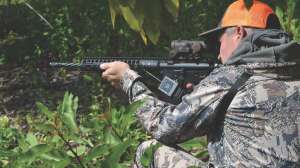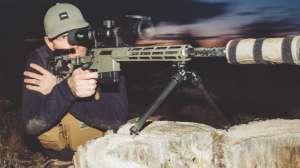

It’s a familiar situation. You’re on the move, spot your prey at long distance and there’s no solid rifle rest nearby.
Take the gamble of making an undetected move to that lonely sapling, and it still might wilt under the rifle’s weight. Add the fact that every second it takes to execute that belly crawl increases the odds the animal will be gone, and the advantages of a quickly deployed bipod become obvious.
Today’s versions are lightweight, sturdy and combat tough. The experts agree there are fewer excuses than ever for not having one on your hunting rifle.
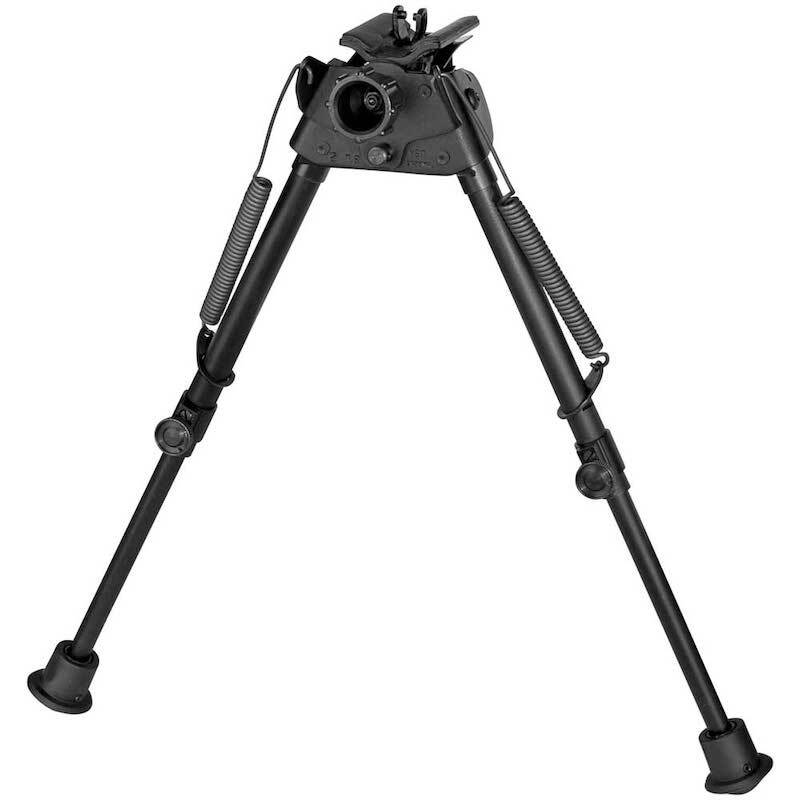
Skip the Dance
“If you get the chance to have a shot of a lifetime, you can’t depend on a branch or tree that you can brace on,” says a spokesperson from Harris Engineering, a company that’s specialized in bipods for more than 60 years. “But if you have a bipod, you’ve got a solid rest.”
“With the amount that hunters spend on clothing, firearms, ammo, footwear and a litany of other gear, the one product that improves their changes the most significantly is a steady shooting platform,” says Jarrod Grove, senior marketing manager at American Outdoor Brands, the manufacturer of Caldwell bipods.
Swagger’s Zach Clark agrees that hunters need a bipod, “Because you don’t want to miss an animal of a lifetime because you were too nervous or out of breath. If this happens you will definitely regret not spending $150 on a tool designed for just about all situations.”
Rob Gearing, managing director at Spartan Precision Equipment, concurs. “People spend shitloads of time planning their hunt,” he says. “An unstable shot is exactly that, and it matters not how good you are — you’re going to be much better on a stable platform.”
Aside from the widely accepted improvements in success and precision, there’s also a practical advantage. Using a bipod during those adrenaline-filled minutes waiting for a textbook ethical shot reduces arm fatigue. Sight-picture-blurring reticle dance is minimized as well. It helps present a clear sight picture, an ideal supplement to your optic’s performance.
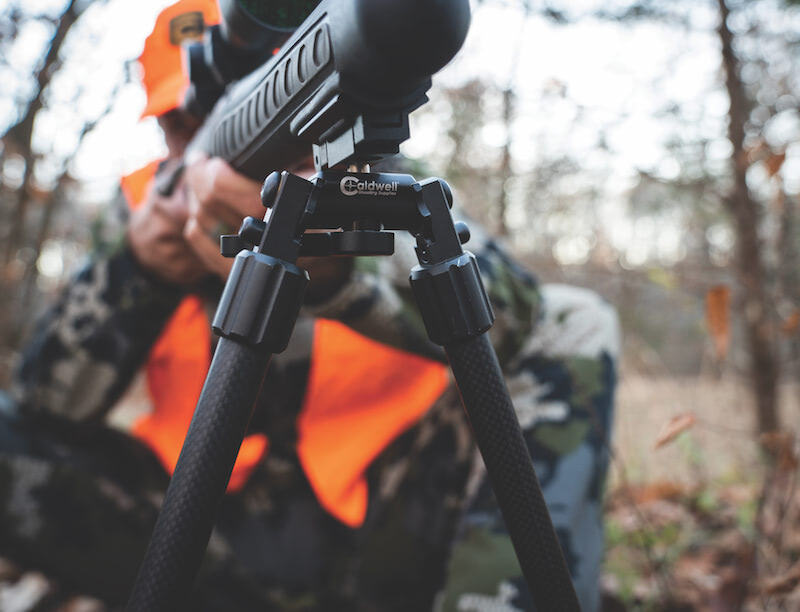
Critical Features
Lightweight, durable, easy to operate, quiet, lifetime warranty and reasonably priced, are the first things to consider when first selecting a bipod, according to Harris Engineering. “Buy it from a company that has good customer service to get parts back to you quickly just in time for a hunt.”
“Quick to deploy, adaptable for uneven surfaces and light in weight are my three key drivers when it comes to hunting bipods and tripods,” adds Gearing.
Clark warns that not every bipod is ideal for hunting, though. “Most or all bipods are extremely rigidly designed to shoot off a bench or prone,” he says. “More for punching paper or pinging steel. These bipods are useless in the field. Whatever it is you may be hunting, your target never walks in perfect, and your standard bipod is extremely limited on movement.”

Tips and Techniques
Reaping the full benefits of a bipod takes more than deploying, adjusting legs for height and leveling the rifle’s cant. The process begins with selecting a suitable spot. Things slide on smooth, flat surfaces — such as concrete. Areas of dirt, sand and grass, where the feet get solid traction are better alternatives. That minimal movement increases follow-up shot speed. Level, hardpack soil can even be slippery. In that case, dig a couple small holes to anchor the bipod’s feet.
The real importance of solid anchoring comes clearly into focus with the next step. Apply firm forward pressure with your shoulder when behind a bipod-steadied rifle. Doing so takes up any play in the two-legged mechanism. How much pressure? There is no one-size-fits-all answer, but it takes only a few minutes to determine what’s optimal for you and your rifle.
Get behind the gun when it’s on the bipod and sight-in at a distant target. Start with little or no pressure at the shoulder, then slowly increase the load. At some point reticle dance will slow, likely stop. There’s your sweet spot. Increasing pressure any further is a waste of energy that promotes fatigue, surrenders concentration on shooting form and, in most cases, re-starts crosshair wander.
Your shoulder, cheek and trigger finger should be the only body parts touching guns anchored on a bipod — with heavy calibers the most notable exceptions. Place your off hand under the rifle and behind the bipod. It’s a simple and effective habit to minimize how much body movement, including breathing and heartbeat, reaches the gun.
“People can become obsessed about expensive rifles and optics yet completely forget the soft tissue holding it,” Gearing emphasizes. “Bipods, tripods and quads provide the answer and as someone who likes my dead things to be exactly that, dead, I will always seek support of the rifle platform to ensure I execute the shot as well as I am able.”
On a more practical note. Harris Engineering reminds owners, “Never fold your bipod up when the legs are extended to where they cross the bore or you’ll shoot the legs off your bipod.” In addition, “Never get oil on the leather pads or they will come off.”
Not Enough
Bipods might not be critical for close-up shots on deer-size or larger game, but it’s a different matter when wary targets stretch the shot distance.
Bipods are an ideal solution, but simply buying and mounting one isn’t enough, according to Clark. “Practice all situations you might think you will encounter. Don’t just go shoot off a bench and call it good. Know your limitations in the field.”