
The .45-70 Government cartridge was once as popular as .30-06 Springfield. It eventually faded into the shadows, but the old warhorse is making a comeback.
Hunters in straight-wall states are revisiting .45-70 because it provides enormous energy, while the suppressor crowd is realizing that it’s one of the hardest-hitting subsonic loads available. On the downside, the price of ammo can keep potential buyers on the fence about picking up a rifle chambered in this caliber. This presents an opportunity to create a reloader.
Keeping a good supply of .45-70 ammo on the shelf is expensive, and that is money that can be put into higher-margin items. Components, on the other hand, are a fraction of the price, take up less space, and can even attract customers who don’t have any interest in expensive cartridges. Stocking .45-70-related goods is effortless and usually only requires keeping some of the basics on hand to satisfy the customer base.

Lead with Lead
One of the biggest benefits to the old buffalo slayer is that it can be loaded with a massive range of bullet weights — but you don’t have to stock them all. Keeping a cross-section of the spectrum will cover most every customer’s needs, and if you can select projectiles that pull double duty, even better.
One such bullet would be the Barnes 250-grain TSX, as name recognition alone will give your clients pause. This pill is made from solid copper, so aside from being one of the lightest out there, it’ll fit the bill for anybody hunting in an area that restricts lead. While their effectiveness easily justifies their price tag, many shooters aren’t going to be interested in paying the premium and are looking for a good all-purpose bullet. Nosler’s 300-grain Straight-Wall is great to stock for this, and having that language on the shelf might remind people that this is a viable option where bottlenecked cartridges are forbidden.
Lastly, these former black-powder cartridges are only a stone’s throw away from subsonic performance, just so long as you use a thumper of a projectile. Hornady’s 410-grain Sub-X caters to those looking to keep the noise down, and their design features promote expansion at low-velocity impacts. So, not only are they great for suppressor owners, but they’re a good bullet for building low-recoil hunting loads, too.
Freedom Flakes
While it’s true some of the best propellants to load this cartridge are in short supply, it is one of the most forgiving out there, leaving you with plenty of top-tier offerings. Helping customers understand those alternatives can often mean the difference between making a sale today or sending them home empty-handed.
Vihtavuori N120 is a terrific powder for mid-weight bullets. Over time, it has become the go-to when hunters are trying to reach top speeds to ensure reliable bullet expansion and peak downrange energy. It also shares compatibility with popular cartridges like .223 Remington, .308 Winchester, .300 Blackout, and many big-bore revolver rounds.
For those looking for light recoil, classic IMR 3130 is handy and does a good job of safely filling the case, even when seating lighter, shorter bullets.
Lastly, revisit your stock of pistol powders, as many of those are perfect for creating subsonic loads. In my testing, I have found Hodgdon Titegroup to be among the most accurate, especially when paired with Hornady’s Sub-X bullets. It is also an unapologetic powder of the economy, as it takes less to yield the same results as others. When propellant is scarce, products like these are highly sought after, especially as prices begin to climb.

Brass Saves Cash
Unlike many modern cartridges, it pays to offer your clients factory-fresh .45-70 brass, even though it might not appear that way at first. With other rounds, customers often buy inexpensive box ammunition to get started, with the intent to save their brass for reloading. The math doesn't work nearly as well with .45-70. Factory ammunition is expensive enough that many shooters decide to handload from the start. If they can't leave your store with everything they need, it might cost you a sale to the shop across town. Here, the typical good, better, best approach covers every personality that comes through the door.
For many experienced reloaders, Starline remains the gold standard. The company built its reputation producing straight-wall brass for cowboy action shooters long before the current lever-gun resurgence, and its consistency has earned a loyal following. Although pricey, explaining to your customers that better brass almost always holds up to more loadings makes it more palatable and attractive to the “buy once, cry once,” crowd.
Hornady offers another excellent option. Beyond producing quality brass, the big red “H” instills confidence, and it frequently represents one of the more affordable choices on the shelf. Nosler occupies a comfortable middle ground, appealing to customers willing to spend a little more for premium components without reaching the highest price point. There’s also a cult-like following to this brand, so it’ll grab the attention of those folks as well.
Shooting Irons
While the heart of this story is selling .45-70 reloading gear with the hope of selling a .45-70 rifle, quite often the first step is already done for us. Should a reloader approach the counter, reminding them that they are perched for effortless ownership of one of the most versatile cartridges on the market could result in a sale.
Keeping modern lever guns like the Henry CRUSR on hand is a sure way to grab the eye of younger generations. For the purist, guns like the revamped Marlin 1895 or Rossi R95 offer deeply blued gunmetal and nostalgic hardwood, satisfying the cowboy that remains chained to a cubicle most days.
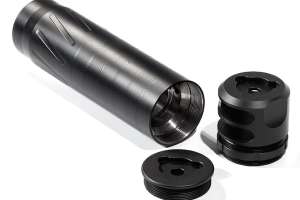
The threaded barrels on these models also open the door to suppressor sales, so keeping big-bore cans in stock makes for an excellent upsell. Thanks to the $0 tax stamp, this is more affordable than ever. Some of the most popular are the Dead Air Primal, the Silencer Central 46-V2 and the SilencerCo Hybrid 46M, as they can suppress nearly an entire collection.

Retail Retooling
If you’re selling a .45-70 rifle to a seasoned reloader, it’s still relevant to strike up a conversation on tooling. All tools wear, and even if they don’t, companies are constantly inventing new products that make reloading easier and create more consistent ammunition.
This year, Hornady released an update to its Classic Press, which features a grease fitting and brass bushings, making for a smoother press stroke. They also released the Versa-Prime Bench Priming Tool, which offers more leverage than hand primers. This is a far more comfortable option if you have a large batch to put together or are suffering from dexterity issues. Putting tools like this in your customers’ hands is the easiest way to sell them. It also doesn’t hurt to remind them that reloading is supposed to be enjoyable.
While one can argue presses and priming tools don’t change much, the same cannot be said for reloading manuals. Every year, dozens of powders and projectiles are released, and revised manuals are the best source for information on how to safely utilize them. Consider carrying a wide breadth of unwrapped literature. Having it available for clients to thumb through as they select components is critical to the sale, but more importantly, safety. Take a moment to guide them through your library, showing them the difference between light trapdoor loads and heavy Ruger #1 loads; it’ll establish you as a credible source and may even save a life. While we don't want to share pet loads for liability reasons, it's not a bad idea to point them in the right direction based on personal experience.
All of your component pairings should be easily verified in an established manual, which is another great reason to have several on hand, as they can differ significantly. Also, never underestimate the value of Hodgdon’s online Reloading Data Center, which has some of the most up-to-date information in the industry and is free to cross-check from a computer or smartphone.
Regardless of where the customer is on their reloading journey, they’re at the very least going to need a die set. As .45-70 predates consumer reloading itself, there is no shortage of brands out there. Keeping familiar names like Lyman and RCBS on the shelf will always result in sales. Keep up with current rebates, however, as those might help you decide where to focus resources in any given year.
Lastly, be sure to remind your customers that they’ll need something to put their finished ammunition in. Keeping a stash of MTM boxes makes for an easy add-on, and one that deeply speaks to those who put pride into their hobby. The RMLD-50 takes up the least amount of shelf space and can be used for many popular magnum rifle cartridges as well. Those looking for something more rugged might like the H50-XL, which offers a locking latch and a removable insert, making it ideal for loose quantities of smaller cartridges as well.
Dropping the Hammer
Although it was one of the very first metallic cartridges, the .45-70 Gov’t, and guns chambered to fire it, soldier on. Therefore, stocking components to keep them fed is a natural revenue stream, and one that is easy to miss. With a basic set of components and perhaps a little tooling, this cartridge can be loaded to fill many roles. Loved by hunters, tacticians, and weekend frontiersmen alike, offering customers the means to roll their own will ensure the romance never dies.