
Walk into any gun shop that actually makes money and you’ll see the same quiet little sales trick at work: three clear choices. A starter option. A step‑up. A premium “I can’t live without it” choice. That’s the Good–Better–Best (GBB) pricing strategy, and it’s still one of the most effective tools a hunting and firearms retailer has.
In our world, this model works because it mirrors how real customers actually shop. Not everyone walks through the door with the same budget, experience or mission. One guy just needs a basic optic for a deer rifle that comes out of the safe two weekends a year. Another wants better glass and durability for serious season‑long use. A third wants top‑tier competitive performance, brand prestige and every feature under the sun. Good–Better–Best gives all three a place to land without forcing the store into a one‑size‑fits‑nobody approach.
Buying Psychology
At its core, GBB is simple psychology: three versions of the same basic solution. The “good” option delivers the essential function at an accessible price and anchors the low price point psychologically, which starts a comparison and justification cycle in the human brain. The “better” option adds real, noticeable improvements in quality, performance, or features — usually at least a 25%-50% price and features increase. The “best” option is the flagship — premium materials, top performance, and the most complete feature set in the category — and sets the mental price ceiling of what you could get. “Best” is typically 50% to 100%+ more than the Better option.
The magic is that this isn’t just a pricing ladder — it’s a DNA-level human psychology decision‑making framework where customers sort through options themselves.
Most shoppers don’t actually want the cheapest thing in the building. Even the budget shoppers do not want cheap, but they mentally default to the least expensive. All shoppers may start there, but they’re quietly worried about regret: “Is this going to fog up, fall apart, or fail when I finally get a shot at a good buck?” At the same time, they’re not always ready to jump to the most expensive option. That makes the middle tier feel like the smart, safe, “I’m not being dumb, but I’m not being reckless” choice. That’s the classic Goldilocks effect, and it’s exactly why the middle-priced products so often become the volume leaders.
In hunting retail, that middle ground is where the money is. A customer looking at binoculars might be drawn to the entry price point at first, but once they compare clarity, low‑light performance, warranty and durability, the mid‑tier glass suddenly looks like the obvious move. It feels like a responsible upgrade, not a splurge. That one step up can quietly add a lot of dollars to the average ticket — usually 25 to 50%.
Premium Products Pay
A lot of retailers will say they are not moving the premium tier very quickly, so they cut them. The premium tier, however, does more work than its unit sales suggest. Remember, the premium tier sets the upper price level and features, so without that on the shelf, the mid-tier becomes the default price ceiling. Once that happens, we have removed the comparative psychological barrier to buying the entry-tier option by over 50%. A couple of high‑end aspirational optics, boots, or packs sitting in the case or on the wall are doing more than just waiting for the right customer — they’re setting the price ceiling. They show the shopper what top-end looks like. Once that anchor is in place, the mid‑tier product instantly feels more attainable and more reasonable.
That’s one of the most overlooked advantages of GBB: The “best” premium-tier product doesn’t have to be the volume leader to be valuable. Its presence is a sales tool that improves the perceived value of the “good” and “better” tiers through anchoring. A $299 optic can feel pricey until it’s sitting next to a $499 premium model. Now it looks smart. A $149 trail camera might feel like a stretch until the shopper sees $249 and $349 options beside it. Suddenly the entry model looks accessible, and the mid‑tier looks like the value winner.
Adding Tiers
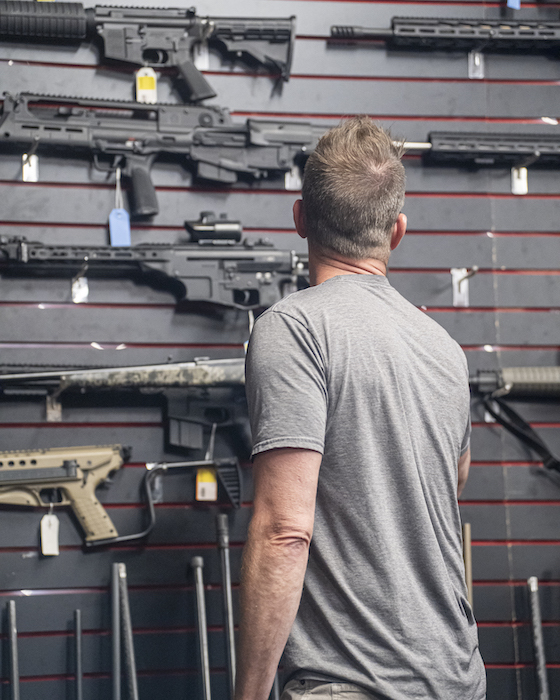
Three is the minimum structure that works with human psychology. It gives the brain a clear low, middle, and high to compare. But in a real hunting or tactical store, you can absolutely run four or even five tiers — as long as you do it with discipline and don’t turn the wall into a confusing price ladder with no real differences.
In the sporting industry, this can be hard, because everyone is trying to deliver similar features at lower price points without clear/truthful quality comparisons.
Think of it like this:
● Good – Basic, functional, gets the job done
● Better – Noticeable upgrade in performance and durability
● Best – Flagship, top performance, full feature set
● Elite / Pro (optional) – Purpose‑built for heavy users, guides, competitors
● Halo (optional) – The “dream” product that shows what’s possible and sets the absolute ceiling
Those extra tiers can absolutely increase sales if they’re built right and have clear big jumps between the pricing tiers. The key is that your fourth and fifth options:
- Stack up in price in clear, believable steps/value
- Add real, visible, explainable features at each step — better glass, better coatings, better warranty, better construction, better adjustability, better materials.
- Do not conflict with or cannibalize the true premium tier — your top dog still needs to feel like the top dog.
Where retailers get into trouble is when they add SKUs instead of tiers. Ten slightly different $199–$229 optics all fighting each other is not a strategy — that’s a clearance rack waiting to happen. But a tight four- to five-tier structure where each step has a clear “why” behind the price? That’s powerful.
Just don’t confuse more tiers with more clutter. Every tier has to earn its spot with a clear role, clear features, and a clear customer in mind. If you can’t explain in one sentence why that increasingly better tier exists and who it’s for, it probably doesn’t belong.
In all of these, the shopper is juggling performance, intended use and budget. Three clearly defined choices simplify that mental math.
The Best Approach
When your staff cannot remember the product tier and sales differentiation, you have too many options. You don’t need 10 nearly identical SKUs to look “well stocked.” In many cases, a tight three‑tier assortment is more productive than a cluttered wall of “what’s the difference?” Too many choices stall decisions and defer customers to a hold-and-research mode. Three good choices speed up buying.
Sales staff benefit just as much. Tiered pricing gives them a simple conversation script instead of a wandering interrogation and can walk the customer through:
● Good – entry level, does the job, great for occasional use
● Better – most popular, better performance and durability
● Best – top‑end performance, heavy use, or the customer who wants the nicest thing in the category
That language is easy to teach, easy to remember, and easy to repeat across the whole store.
Margin Protection
For sporting goods retailers, there’s another big upside: margin protection. The good tier brings in price‑sensitive shoppers. It is also usually competitively low margin, but it keeps you in the game on entry price points. The better tier often becomes the sweet spot for both margin and unit volume, plus this tier often has a MAP, which further helps preserve margin. The best tier delivers higher dollars per transaction and reinforces the store’s quality image. Together, the three levels create a healthier pricing architecture than just trying to be the cheapest shop in town.
Old School Works
Even in an era of online reviews, endless SKUs and algorithm‑driven “you might also like” suggestions, this old‑school strategy still works because it lines up with how people reduce uncertainty. They want structure. They want a clear path. Give them three honest, well‑spaced choices — and they’ll usually walk themselves right into the one that’s best for them and best for your bottom line.